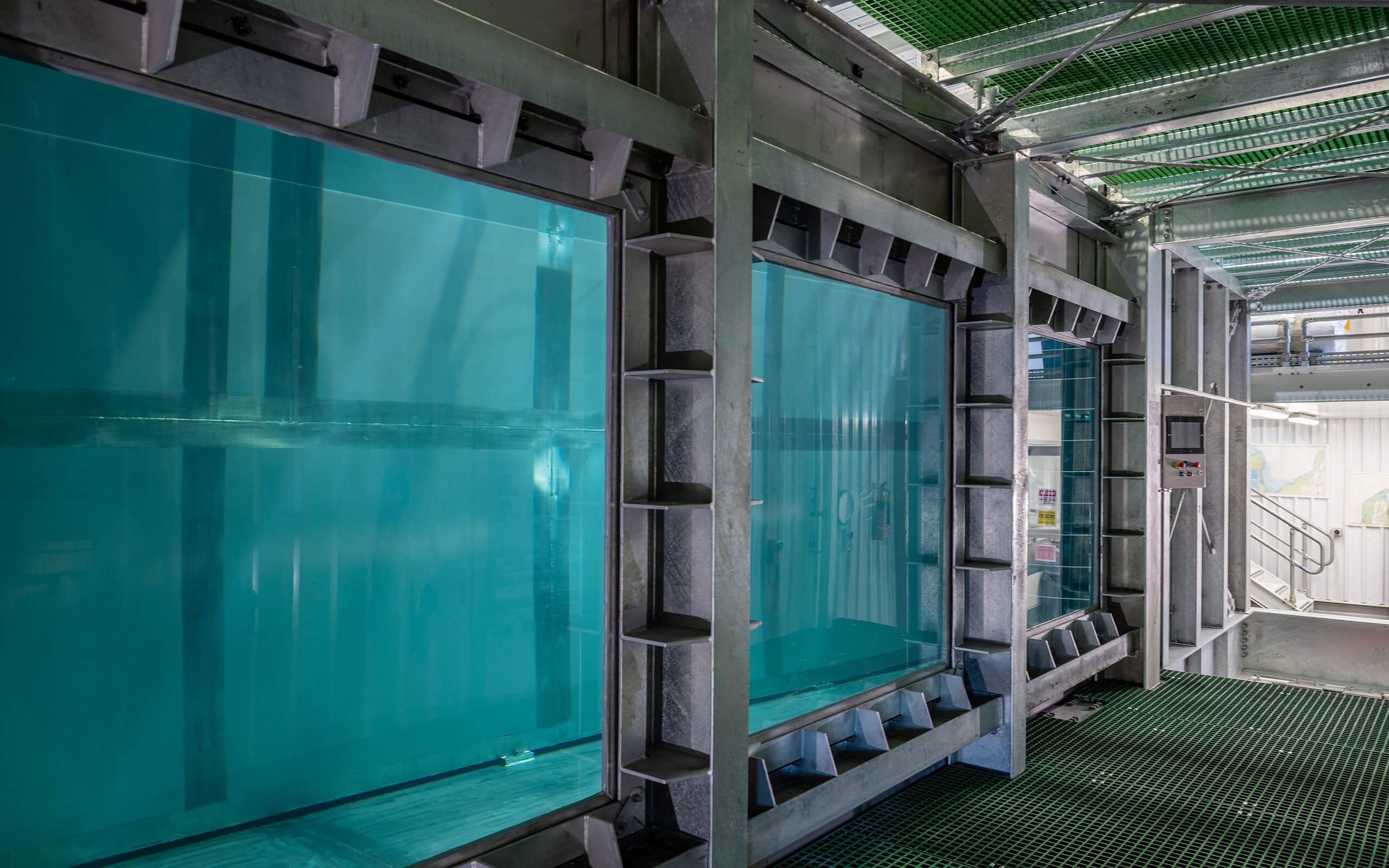
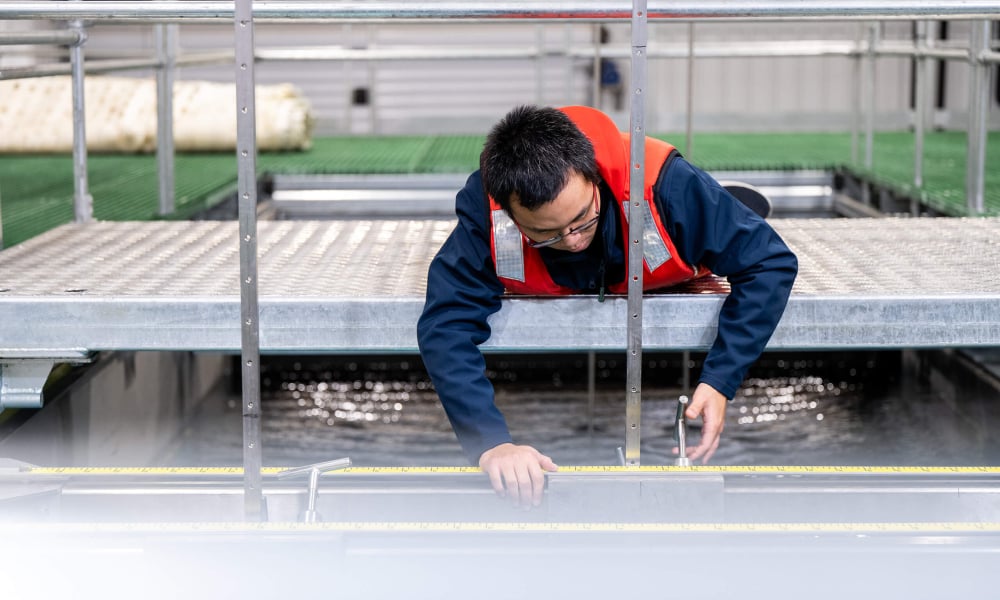
The flume tank is purpose-built to simulate coastal and open-water conditions.
Home to NZ's first flume tank
The Bioeconomy Science Institute is home to Aotearoa New Zealand’s largest flume tank facility, an asset playing a pivotal role in Nelson Tasman’s Blue Economy.
The Bioeconomy Science Institute is home to Aotearoa New Zealand’s largest flume tank facility, an asset playing a pivotal role in Nelson Tasman’s Blue Economy. The flume tank is purpose-built to simulate coastal and open-water conditions, enabling researchers and industry to observe how currents and turbulence interact with marine systems in a controlled environment.

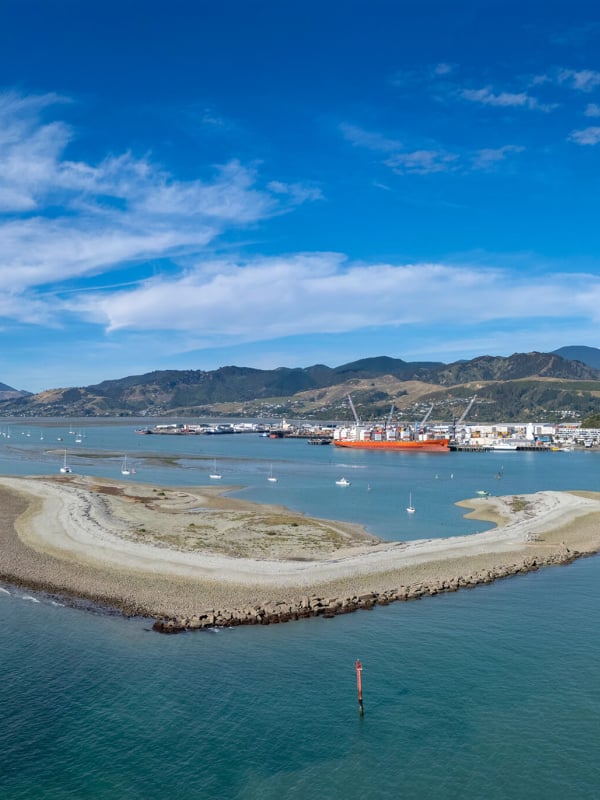

In Nelson Tasman, the ocean is more than a backdrop; it shapes how people live, work and connect. With three national parks, an extensive coastline, and a lifestyle deeply tied to the sea, the region continues to balance economic opportunity with environmental stewardship. The strong relationship with the ocean makes Nelson Tasman a natural home for innovation that supports sustainable marine industries and contributes to a strong Blue Economy.
For a region defined by this connection, the flume tank is more than scientific infrastructure; it’s a practical tool for innovation. Nelson Tasman’s Blue Economy spans aquaculture, seafood, marine engineering, and emerging ocean technologies, all of which benefit from the flume tank’s ability to test, refine, and de-risk ideas before they are deployed in the ocean.

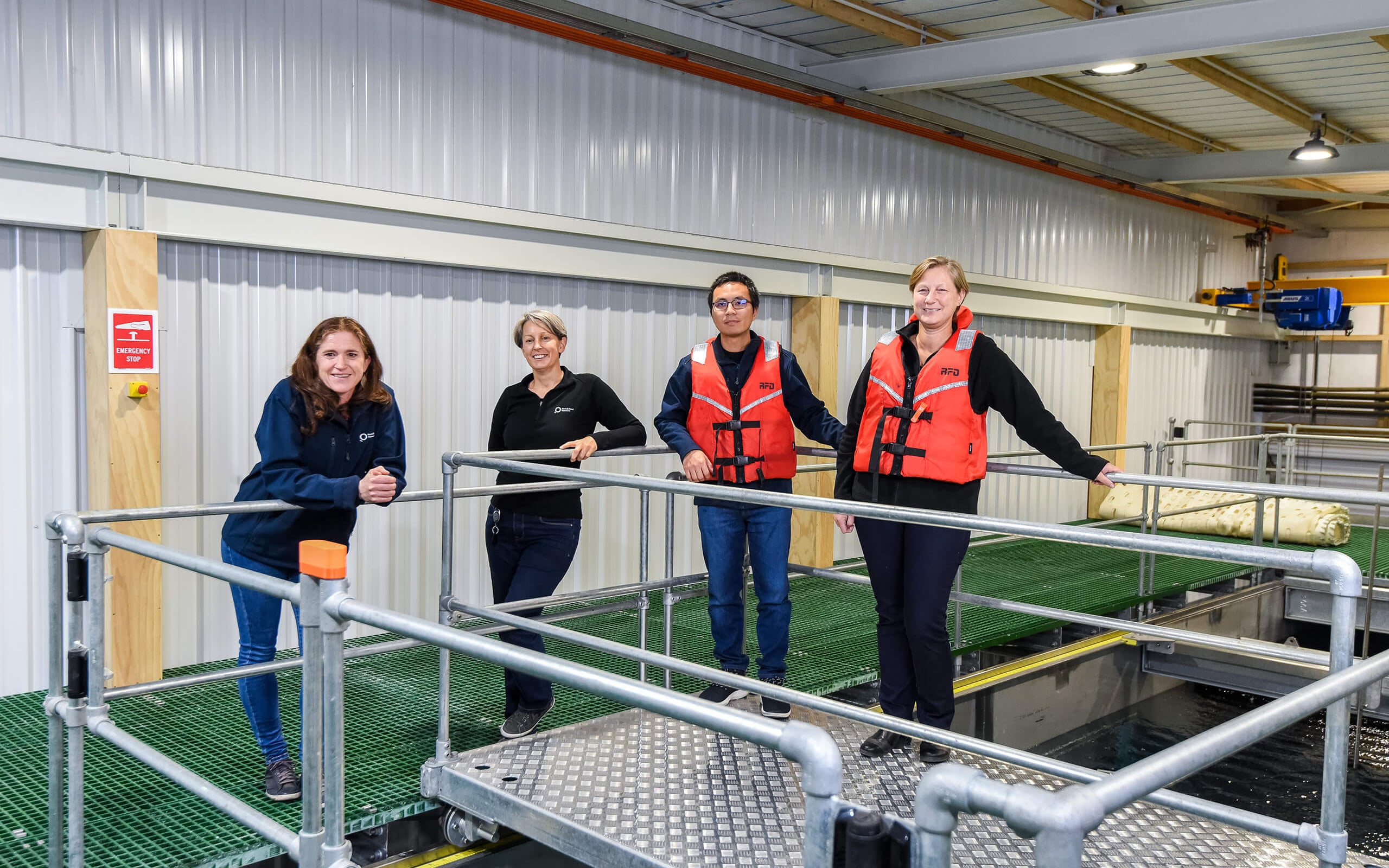
Bioeconomy Science Institute’s work is driven by a team of people whose expertise is deeply connected to the marine environment of Nelson Tasman. Helen Palmer, General Manager Science of the Seafood Technologies portfolio, says Nelson Tasman provides an ideal setting for applied marine research, enabling opportunities for collaboration with science and industry. The flume tank offers an opportunity to develop practical solutions that support both environmental outcomes and commercial success.
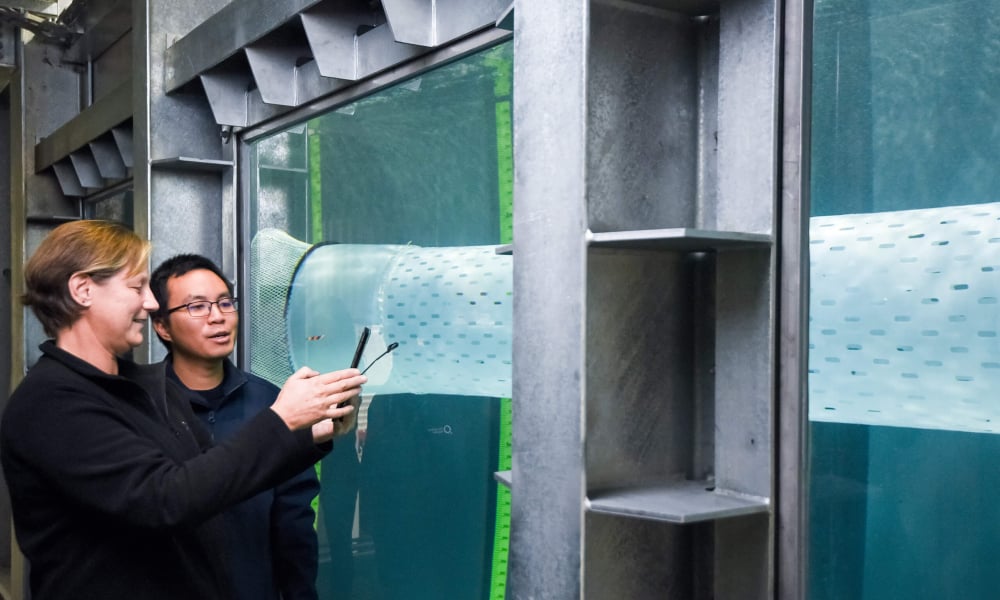
One of the Bioeconomy Science Institute’s teams of scientists are building new technologies that put the needs of the fish first, such as FloMo and the new open ocean aquaculture prototype at D’Urville Island, and work together to test the prototypes they develop in the flume tank.

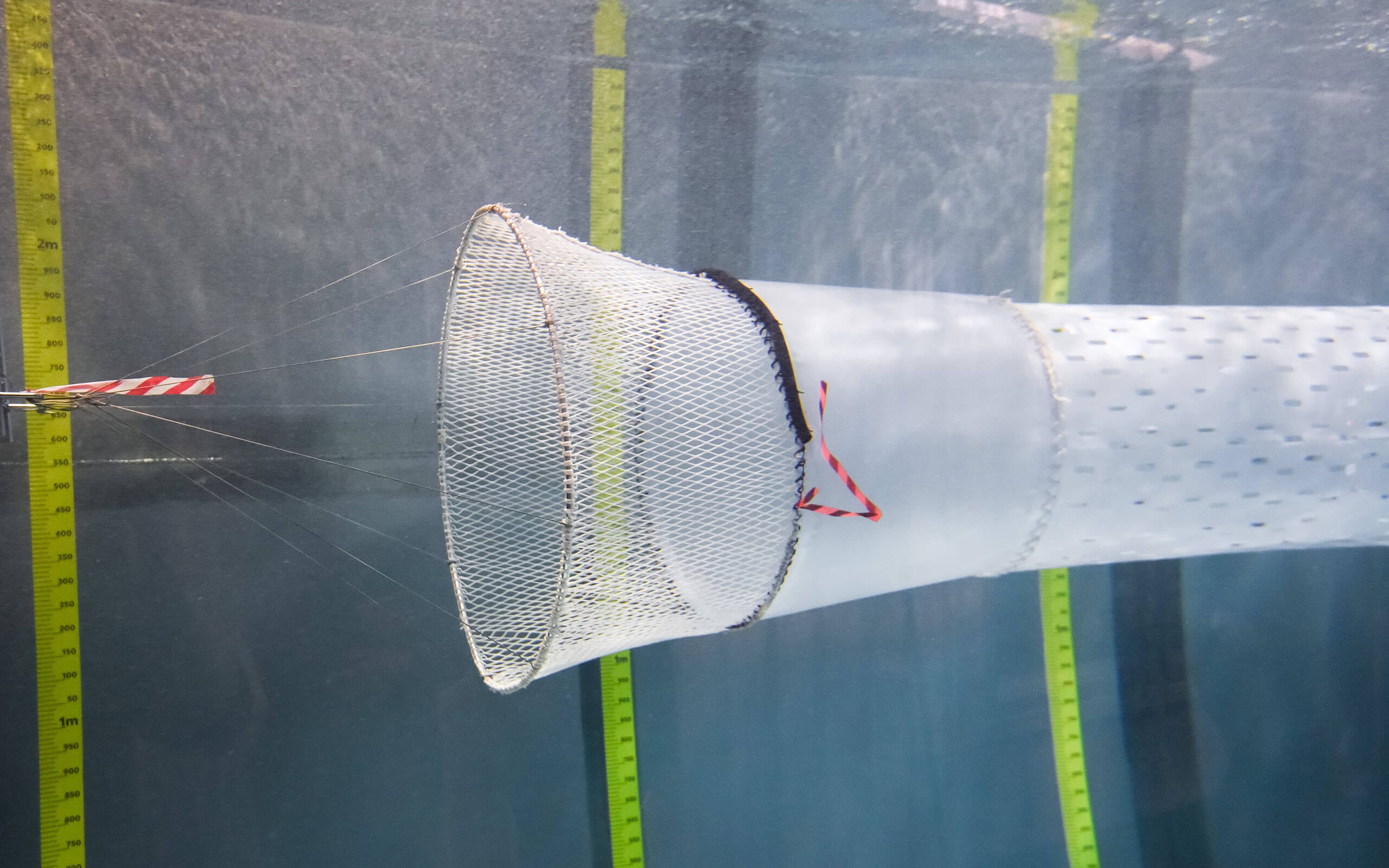
The flume tank also gives innovators developing new aquaculture technologies the opportunity to trial new farm prototypes and concepts, to assess their performance under varying flow conditions. Not only can this help innovators understand how water force and dynamics influence structure design, but it has the potential to be applied to practical considerations such as how to optimise spat settlement surfaces to improve yield, or to study feed dispersion and waste movement.
Another example of practical use is of marine engineering firms using the facility to test mooring systems, underwater structures, and vessel components, ensuring durability and performance in dynamic conditions. For emerging technologies, the flume tank can also support the development of sensors, robotics, and autonomous vehicles by replicating real-world hydrodynamics at a manageable scale.


By bringing together science and industry, the flume tank acts as a bridge between research and application. It strengthens Nelson Tasman’s position as a hub for marine innovation and supports a Blue Economy that reflects the region’s lifestyle: productive, connected to the ocean, and committed to protecting it for future generations.